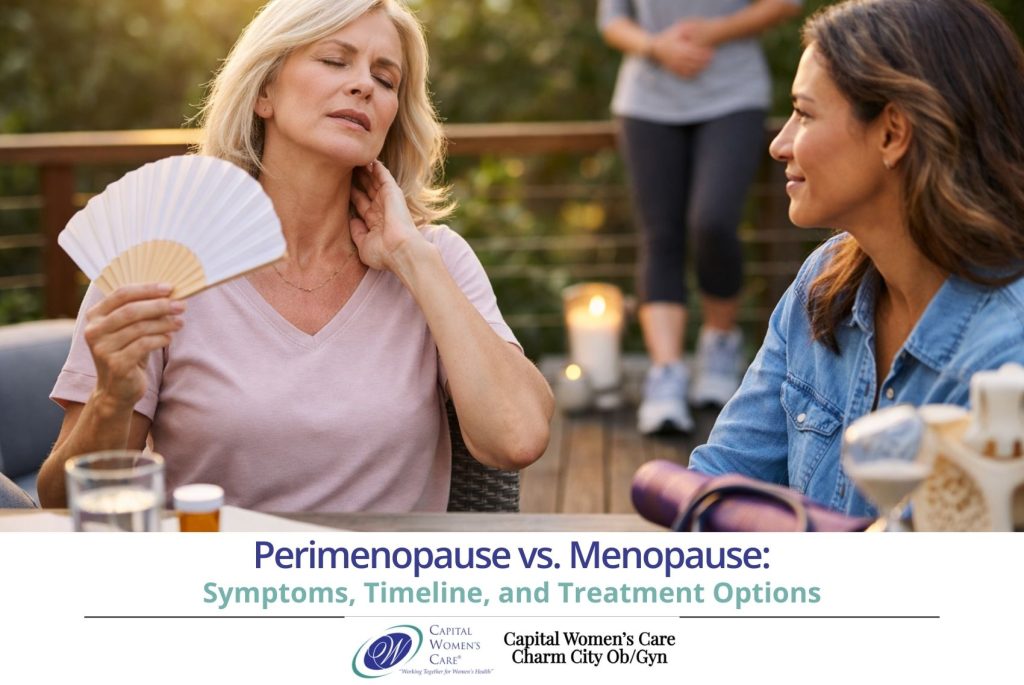
As women move through midlife, hormonal changes can bring new symptoms, questions, and concerns. Two commonly confused stages of this transition are perimenopause and menopause. While closely related, they are not the same—and understanding the difference is key to managing symptoms effectively and maintaining long-term health.
At Capital Women’s Care – Charm City Ob/Gyn, our experienced providers support women through every stage of life, including the perimenopause and menopause transition. Below, we break down what to expect, how these stages differ, and what treatment options are available.
What Is Perimenopause?
Perimenopause is the transitional period leading up to menopause. During this time, the ovaries gradually produce less estrogen, and hormone levels fluctuate unpredictably.
When Does Perimenopause Start?
- Typically begins in a woman’s 40s, though it can start in the late 30s
- Can last several months to 10 years, with an average of 4–8 years
Common Perimenopause Symptoms
- Irregular menstrual cycles
- Hot flashes and night sweats
- Mood swings, anxiety, or irritability
- Sleep disturbances
- Brain fog or difficulty concentrating
- Weight gain, especially around the abdomen
- Decreased libido
- Breast tenderness
During perimenopause, pregnancy is still possible, so contraception may still be needed.
What Is Menopause?
Menopause is officially diagnosed when a woman has gone 12 consecutive months without a menstrual period, with no other medical cause.
When Does Menopause Occur?
- Average age in the U.S. is 51
- Can occur earlier due to genetics, medical treatments, or surgery
Common Menopause Symptoms
- Persistent hot flashes
- Vaginal dryness or discomfort during intimacy
- Urinary changes or recurrent UTIs
- Sleep issues
- Mood changes
- Changes in skin elasticity and hair texture
After menopause, estrogen levels remain consistently low, which can impact bone density and heart health.
Key Differences Between Perimenopause and Menopause
| Feature | Perimenopause | Menopause |
| Menstrual cycles | Irregular | Stopped for 12 months |
| Hormones | Fluctuating | Consistently low |
| Pregnancy possible | Yes | No |
| Duration | Several years | Permanent stage |
Treatment Options for Perimenopause and Menopause
Treatment is highly individualized and depends on symptom severity, medical history, and personal preferences.
Lifestyle & Non-Medical Approaches
- Balanced diet and regular exercise
- Stress management and sleep hygiene
- Limiting caffeine, alcohol, and spicy foods
- Cooling strategies for hot flashes
Hormone Therapy (HT)
- Estrogen or estrogen-progesterone therapy
- Available as pills, patches, gels, creams, or vaginal treatments
- Often the most effective treatment for moderate to severe symptoms
Non-Hormonal Medications
- Certain antidepressants for hot flashes and mood symptoms
- Medications for bone health
- Vaginal moisturizers and lubricants
Preventive Care
- Bone density screening
- Cardiovascular risk assessment
- Ongoing gynecologic exams and wellness visits
Your provider at Charm City Ob/Gyn will help you weigh benefits and risks to determine the safest, most effective plan.
Frequently Asked Questions (Q&A)
Q: How do I know if I’m in perimenopause or menopause?
A: Irregular periods with symptoms usually indicate perimenopause. Menopause is diagnosed only after 12 months without a period. Your provider may also consider symptoms and medical history.
Q: Can blood tests diagnose menopause?
A: Hormone levels fluctuate, especially in perimenopause, so blood tests are not always reliable. Diagnosis is often based on age, symptoms, and menstrual history.
Q: Are hot flashes normal during perimenopause?
A: Yes. Hot flashes can begin years before menopause and vary in frequency and intensity.
Q: Is hormone therapy safe?
A: For many women, hormone therapy is safe and effective when started at the appropriate time and monitored by a healthcare provider. Individual risk factors are always reviewed.
Q: Will menopause cause weight gain?
A: Hormonal changes can affect metabolism, but lifestyle factors play a major role. A personalized wellness plan can help manage weight changes.
Q: Should I still see my OB/GYN after menopause?
A: Absolutely. Routine gynecologic care remains essential for bone health, heart health, cancer screening, and overall well-being.
Compassionate Care Through Every Stage of Life
Navigating perimenopause and menopause doesn’t have to be confusing or uncomfortable. At Capital Women’s Care – Charm City Ob/Gyn, we provide personalized, evidence-based care to help you feel informed, supported, and empowered during this transition.
Contact Information
Capital Women’s Care – Charm City Ob/Gyn
Towson Office
7801 York Road, Suite 133
Towson, MD 21204
📞 (410) 339-7447
Bel Air Office
2103 Laurel Bush Rd
Bel Air, MD 21015
📞 (410) 515-7600
🌐 Website:https://cwcaretowson.com
📅 Appointments:https://cwcaretowson.com/appointments