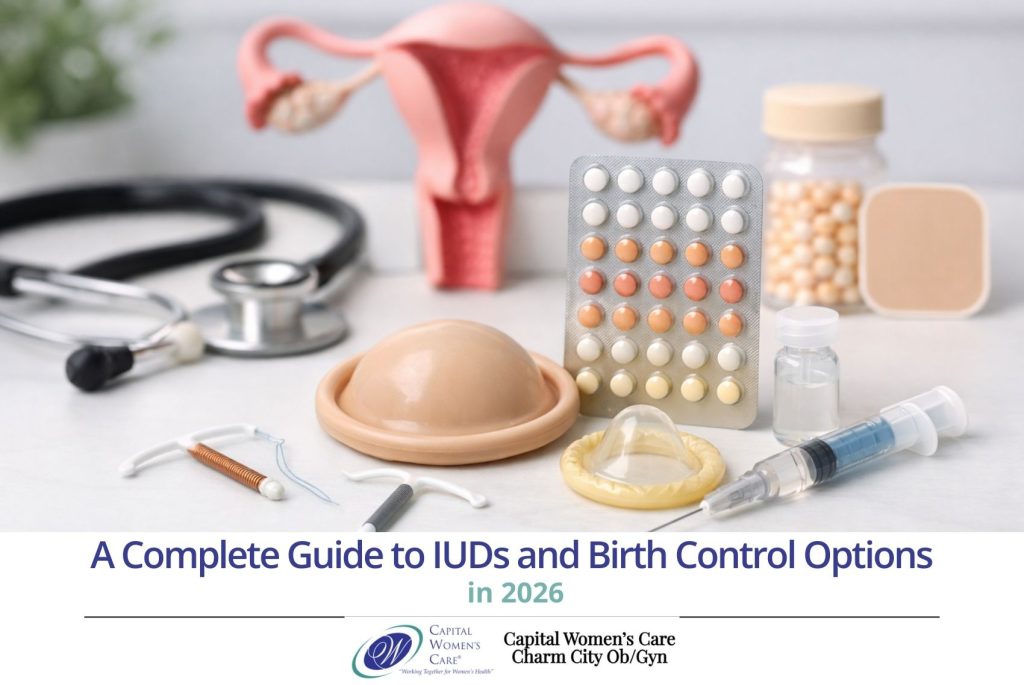
Choosing the right birth control is an important and personal decision. With advancements in reproductive healthcare and expanded options in 2026, patients have more safe, effective, and customizable birth control choices than ever before.
At Capital Women’s Care – Charm City Ob/Gyn, we believe that informed patients are empowered patients. This guide is designed to help you understand today’s birth control options—especially intrauterine devices (IUDs)—so you can make confident decisions about your reproductive health.
Why Birth Control Matters Beyond Pregnancy Prevention
Birth control plays a role in much more than preventing pregnancy. Many patients use contraception to:
- Regulate menstrual cycles
- Reduce heavy bleeding or painful periods
- Manage hormonal conditions such as PCOS or endometriosis
- Improve acne
- Plan pregnancy timing
Your OB/GYN can help you choose a method that aligns with your health needs, lifestyle, and future goals.
Overview of Birth Control Options in 2026
Modern birth control methods fall into several main categories:
- Long-acting reversible contraception (LARC)
- Hormonal methods
- Barrier methods
- Permanent birth control
- Fertility awareness and natural methods
Each option offers unique benefits, and no single method is “best” for everyone.
What Is an IUD?
An intrauterine device (IUD) is a small, T-shaped device placed in the uterus by a healthcare provider. IUDs are one of the most effective forms of birth control available, with a success rate of over 99%.
They are considered long-acting reversible contraception, meaning they provide years of protection but can be removed at any time if pregnancy is desired.
Types of IUDs Available in 2026
Hormonal IUDs
Hormonal IUDs release a low dose of progestin to prevent pregnancy by thickening cervical mucus and thinning the uterine lining.
Benefits may include:
- Lighter or shorter periods
- Less menstrual cramping
- Long-lasting protection (3–8 years depending on the device)
Common hormonal IUDs include Mirena®, Liletta®, Kyleena®, and Skyla®.
Copper IUD
The copper IUD is a hormone-free option that uses copper to create an environment that prevents fertilization.
Benefits include:
- Effective for up to 10–12 years
- No hormones
- Can be used as emergency contraception if placed within 5 days of unprotected sex
Some patients may experience heavier periods initially, which often improves over time.
Other Birth Control Options to Consider
Birth Control Pills
Oral contraceptives are taken daily and can regulate cycles, reduce cramps, and help with acne. Consistency is key for effectiveness.
Birth Control Patch
A weekly patch applied to the skin that releases estrogen and progestin.
Vaginal Ring
A flexible ring worn monthly that releases hormones locally.
Birth Control Shot
An injection given every three months that does not require daily attention.
Birth Control Implant
A small rod inserted into the upper arm that releases hormones and provides protection for up to three years.
Barrier Methods
Includes condoms, diaphragms, and cervical caps. Condoms are the only method that also protect against sexually transmitted infections (STIs).
Permanent Birth Control
Procedures such as tubal ligation or salpingectomy may be an option for patients who are certain they do not want future pregnancies.
How to Choose the Right Birth Control Method
The best birth control method depends on many factors, including:
- Overall health and medical history
- Menstrual symptoms
- Hormone sensitivity
- Lifestyle and daily routine
- Family planning goals
At Capital Women’s Care – Charm City Ob/Gyn, our providers offer personalized contraceptive counseling to help you find the option that fits your needs.
Frequently Asked Questions About IUDs and Birth Control
Are IUDs safe?
Yes. IUDs are one of the safest and most widely studied birth control methods. Serious complications are rare when placed by a trained OB/GYN.
Does IUD insertion hurt?
Most patients experience brief cramping during insertion. Discomfort typically lasts only a few minutes, and many patients find it manageable.
Can I get pregnant after an IUD is removed?
Yes. Fertility usually returns immediately after removal.
Are IUDs appropriate if I’ve never been pregnant?
Yes. IUDs are safe and effective for patients regardless of pregnancy history.
Do IUDs protect against STIs?
No. IUDs do not protect against sexually transmitted infections. Condoms are recommended for STI prevention.
Can birth control help with heavy or painful periods?
Yes. Hormonal IUDs and other hormonal methods often significantly reduce menstrual bleeding and cramping.
How often do I need follow-up visits?
After insertion, routine annual gynecologic exams are typically sufficient unless you experience symptoms or concerns.
Why Choose Capital Women’s Care – Charm City Ob/Gyn?
Our experienced OB/GYN team is dedicated to providing compassionate, evidence-based care in a comfortable and supportive environment. We take the time to listen, educate, and partner with you in making informed decisions about your reproductive health.
Whether you’re choosing birth control for the first time or considering a new option, we’re here to help.
Contact Information
Capital Women’s Care – Charm City Ob/Gyn
Towson Office
7801 York Road, Suite 133
Towson, MD 21204
📞 (410) 339-7447
Bel Air Office
2103 Laurel Bush Rd
Bel Air, MD 21015
📞 (410) 515-7600
🌐 Website: https://cwcaretowson.com
📅 Appointments: https://cwcaretowson.com/appointments