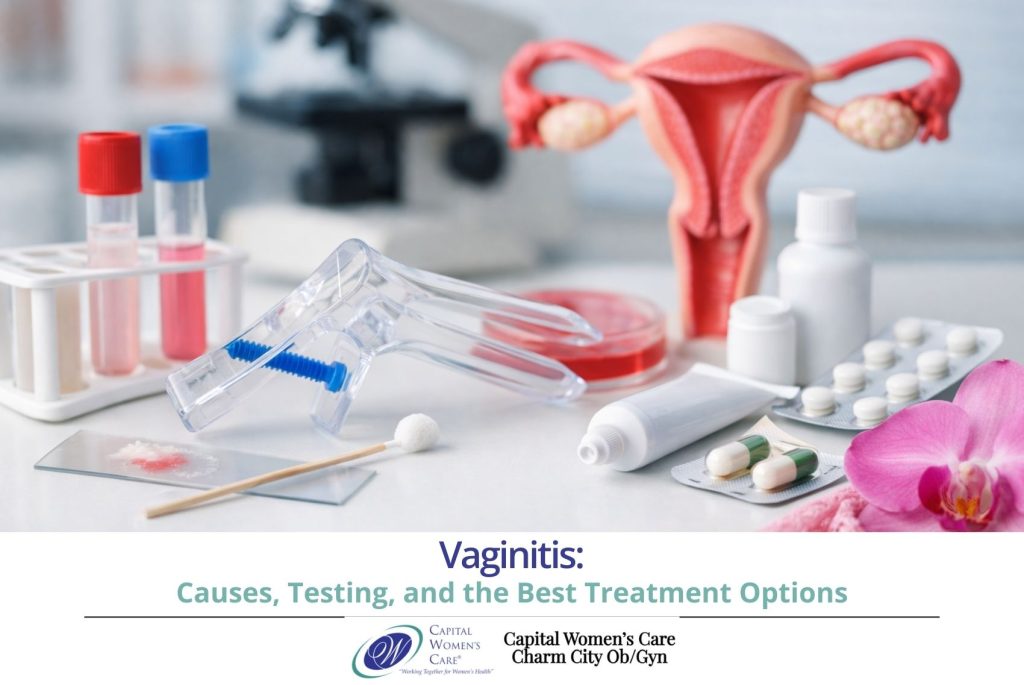
Vaginitis is a common gynecologic condition that affects women of all ages. While it’s often uncomfortable and sometimes embarrassing to talk about, vaginitis is highly treatable once the cause is properly identified. At Capital Women’s Care – Charm City Ob/Gyn, our experienced providers help patients understand their symptoms, determine the underlying cause, and receive effective, personalized treatment.
This guide explains what vaginitis is, what causes it, how it’s diagnosed, and the most effective treatment options available.
What Is Vaginitis?
Vaginitis is inflammation of the vagina that can cause symptoms such as:
- Vaginal itching or irritation
- Unusual vaginal discharge
- Odor
- Burning or pain during urination
- Discomfort during intercourse
Symptoms can range from mild to severe and may develop suddenly or gradually. Because many conditions share similar symptoms, accurate testing is essential.
Common Causes of Vaginitis
There are several types of vaginitis, each with a different cause and treatment approach.
1. Bacterial Vaginosis (BV)
- Caused by an imbalance of normal vaginal bacteria
- Often associated with a fishy odor and thin gray or white discharge
- Not considered a sexually transmitted infection (STI), but sexual activity can increase risk
2. Yeast Infections (Candidiasis)
- Caused by an overgrowth of Candida yeast
- Symptoms include thick white discharge, intense itching, and redness
- Can be triggered by antibiotics, pregnancy, diabetes, or hormonal changes
3. Trichomoniasis
- A sexually transmitted infection caused by a parasite
- May cause yellow-green discharge, odor, itching, and discomfort
- Requires treatment for both partners
4. Atrophic Vaginitis
- Often occurs after menopause due to decreased estrogen
- Causes dryness, burning, and irritation
- Not related to infection
5. Irritant or Allergic Vaginitis
- Triggered by soaps, detergents, douches, scented products, or tight clothing
- Symptoms usually improve once the irritant is removed
How Vaginitis Is Diagnosed
Because symptoms can overlap, self-diagnosis is not always accurate. At Charm City Ob/Gyn, we offer thorough evaluations that may include:
- Review of symptoms and medical history
- Pelvic examination
- Vaginal pH testing
- Microscopic examination of vaginal discharge
- Laboratory testing to identify bacteria, yeast, or STIs
Accurate testing ensures you receive the correct treatment the first time.
Best Treatment Options for Vaginitis
Treatment depends entirely on the cause:
- Bacterial Vaginosis: Prescription oral or vaginal antibiotics
- Yeast Infections: Antifungal medications (oral or vaginal)
- Trichomoniasis: Prescription antibiotics for both partners
- Atrophic Vaginitis: Vaginal estrogen therapy or non-hormonal moisturizers
- Irritant Vaginitis: Eliminating triggers and soothing treatments
Our providers focus on long-term relief, not just symptom management, and will discuss prevention strategies when appropriate.
When to See a Provider
You should schedule an appointment if you experience:
- Persistent or worsening symptoms
- Recurrent infections
- Vaginal symptoms during pregnancy
- Symptoms accompanied by fever or pelvic pain
- Uncertainty about whether symptoms are a yeast infection or something else
Prompt care can prevent complications and unnecessary discomfort.
Vaginitis Q&A
Is vaginitis contagious?
Some types, such as trichomoniasis, are sexually transmitted. Others, like yeast infections and bacterial vaginosis, are not contagious but can be influenced by sexual activity.
Can vaginitis go away on its own?
Mild cases sometimes resolve, but many require treatment. Delaying care can worsen symptoms or lead to recurrence.
Can over-the-counter treatments always be used?
Not always. Using the wrong treatment can prolong symptoms. If you’re unsure of the cause, it’s best to be evaluated by a provider.
Why do I keep getting recurrent vaginitis?
Recurrent infections may be related to hormonal changes, antibiotic use, uncontrolled diabetes, or incomplete treatment. A provider can help identify contributing factors.
Does menopause increase the risk of vaginitis?
Yes. Lower estrogen levels can cause vaginal thinning and dryness, making irritation and infection more likely.
Is vaginitis preventable?
While not all cases are preventable, risk can be reduced by:
- Avoiding douches and scented products
- Wearing breathable cotton underwear
- Practicing safe sex
- Following treatment instructions fully
Compassionate Care You Can Trust
At Capital Women’s Care – Charm City Ob/Gyn, we understand how disruptive vaginal symptoms can be to your comfort and confidence. Our team provides expert diagnosis, evidence-based treatments, and respectful, judgment-free care at every visit.
Contact Information
Towson Office
7801 York Road, Suite 133
Towson, MD 21204
📞 (410) 339-7447
Bel Air Office
2103 Laurel Bush Rd
Bel Air, MD 21015
📞 (410) 515-7600
🌐 Website: cwcaretowson.com
📅 Appointments: cwcaretowson.com/appointments