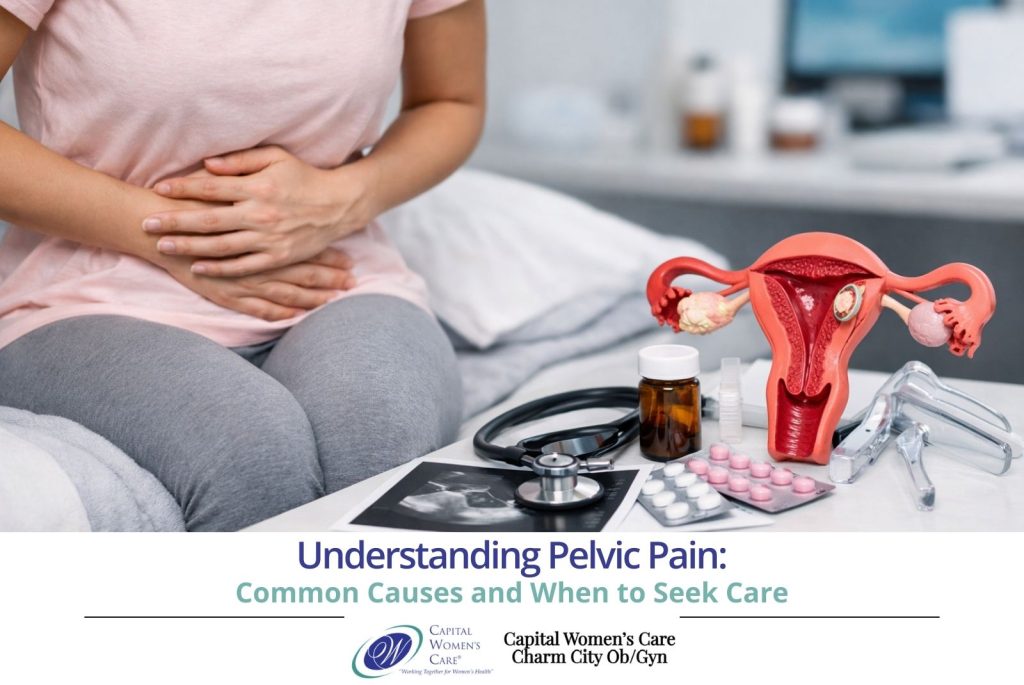
Pelvic pain is a common yet often misunderstood condition that affects many women at different stages of life. It can range from mild discomfort to severe, persistent pain that interferes with daily activities, work, and emotional well-being. At Capital Women’s Care – Charm City Ob/Gyn, our experienced providers are committed to helping patients understand the causes of pelvic pain and guiding them toward effective, personalized treatment.
Understanding what pelvic pain is, what may be causing it, and when to seek medical care is an important step in protecting your reproductive and overall health.
What Is Pelvic Pain?
Pelvic pain refers to discomfort felt in the lower abdomen or pelvic region. It may be acute (sudden and short-term) or chronic (lasting six months or longer). Pelvic pain can occur during specific times—such as menstruation, intercourse, or pregnancy—or may be constant with no obvious trigger.
Because the pelvis contains many organs and structures, including the uterus, ovaries, bladder, intestines, and muscles, identifying the exact cause of pelvic pain often requires expert evaluation.
Common Causes of Pelvic Pain
Pelvic pain can stem from gynecologic, urinary, gastrointestinal, musculoskeletal, or neurological conditions. Some of the most common causes include:
Gynecologic Causes
- Endometriosis: A condition where uterine-like tissue grows outside the uterus, often causing chronic pelvic pain, painful periods, and discomfort during intercourse.
- Uterine Fibroids: Noncancerous growths in the uterus that may lead to pressure, heavy bleeding, and pelvic pain.
- Ovarian Cysts: Fluid-filled sacs on the ovaries that can cause sharp or dull pain, especially if they rupture or twist.
- Pelvic Inflammatory Disease (PID): An infection of the reproductive organs that can cause persistent pelvic pain if left untreated.
- Menstrual Cramps (Dysmenorrhea): Painful periods caused by uterine contractions, which may be more severe in some individuals.
Urinary and Gastrointestinal Causes
- Urinary Tract Infections (UTIs): Often associated with burning during urination, pelvic pressure, and discomfort.
- Interstitial Cystitis: A chronic bladder condition that causes pelvic pain and urinary urgency.
- Irritable Bowel Syndrome (IBS): Can cause bloating, cramping, and lower abdominal pain that overlaps with pelvic discomfort.
Musculoskeletal and Other Causes
- Pelvic Floor Muscle Dysfunction: Tight or weakened pelvic floor muscles can result in chronic pain.
- Nerve Pain: Compression or irritation of pelvic nerves may lead to ongoing discomfort.
- Pregnancy-Related Changes: Ligament stretching and pressure on pelvic structures can cause pain during pregnancy.
When Should You Seek Medical Care?
While occasional mild pelvic discomfort may not be cause for concern, certain symptoms should prompt a visit to your OB/GYN:
- Pelvic pain that is severe, persistent, or worsening
- Pain that interferes with daily life, work, or sleep
- Pelvic pain accompanied by fever, nausea, vomiting, or dizziness
- Painful intercourse
- Heavy, irregular, or painful menstrual periods
- Pelvic pain with abnormal vaginal bleeding or discharge
- Sudden, sharp pelvic pain
Early evaluation can help prevent complications and improve long-term outcomes.
How Pelvic Pain Is Diagnosed
At Capital Women’s Care – Charm City Ob/Gyn, diagnosing pelvic pain begins with a detailed medical history and physical examination. Depending on your symptoms, your provider may recommend:
- Pelvic exams
- Ultrasound or imaging studies
- Laboratory testing
- Diagnostic procedures such as laparoscopy
Our goal is to identify the root cause of your pain and develop a treatment plan that addresses your individual needs.
Treatment Options for Pelvic Pain
Treatment depends on the underlying cause and may include:
- Medications to manage pain, inflammation, or infection
- Hormonal therapies
- Physical therapy for pelvic floor dysfunction
- Lifestyle modifications
- Minimally invasive surgical options when necessary
Your care plan will be tailored to your symptoms, medical history, and reproductive goals.
Frequently Asked Questions (Q&A)
Is pelvic pain normal?
Occasional mild pelvic discomfort can be normal, especially during menstruation or ovulation. However, ongoing or severe pain is not normal and should be evaluated by a healthcare provider.
Can stress cause pelvic pain?
Yes. Stress and anxiety can contribute to muscle tension, including in the pelvic floor, which may lead to pain or discomfort.
Does pelvic pain always mean a gynecologic problem?
No. Pelvic pain can originate from urinary, gastrointestinal, musculoskeletal, or neurological causes, which is why a comprehensive evaluation is important.
Can pelvic pain affect fertility?
Some conditions associated with pelvic pain, such as endometriosis or pelvic inflammatory disease, may impact fertility if left untreated. Early diagnosis and management are key.
How long should I wait before seeing a doctor for pelvic pain?
If pelvic pain lasts more than a few days, recurs frequently, or is severe, you should schedule an appointment promptly.
Can pelvic pain be treated without surgery?
Yes. Many cases respond well to non-surgical treatments such as medication, physical therapy, or hormonal management.
Compassionate, Expert Care You Can Trust
Pelvic pain can be complex, but you don’t have to manage it alone. At Capital Women’s Care – Charm City Ob/Gyn, our team is dedicated to providing compassionate, evidence-based care to help you feel your best.
Contact Information
Capital Women’s Care – Charm City Ob/Gyn
Towson Office
7801 York Road, Suite 133
Towson, MD 21204
📞 (410) 339-7447
Bel Air Office
2103 Laurel Bush Rd
Bel Air, MD 21015
📞 (410) 515-7600
🌐 Website: https://www.cwcaretowson.com
📅 Appointments: https://www.cwcaretowson.com/appointments